A custom wine bag looks like a simple product: a printed sleeve with handles that carries a bottle. Because it looks simple, it is easy to order badly, and the mistakes usually surface only after a few hundred units have arrived. The failures are predictable, though, which means they are avoidable. Here are the five that cost the most money and goodwill, and how to design around each one before you approve a purchase order.
Designing to the volume instead of the bottle shape
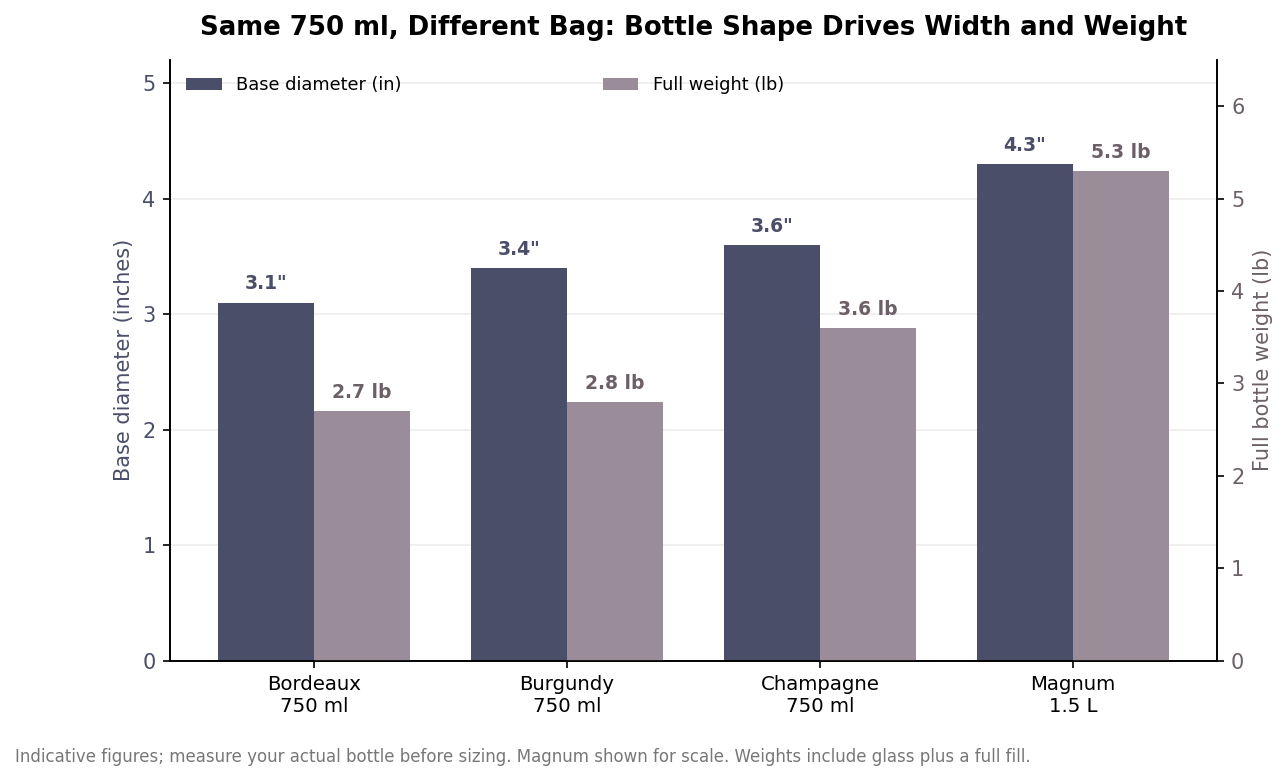
Every standard bottle holds 750 milliliters, but that number tells you nothing about the silhouette, and the silhouette is what the bag has to fit. A classic Bordeaux bottle runs roughly 11.5 to 12 inches tall with a base around 3 to 3.2 inches across. A Burgundy or Pinot bottle is a little shorter and noticeably wider, closer to 3.4 inches. A Champagne or sparkling bottle is wider still, often 3.5 inches or more, because the glass is built to hold pressure. If you size a bag to a Bordeaux and your client fills it with sparkling, the bottle will not seat, or it will strain the seams. The fix is to design to the widest bottle you expect to carry, add a small clearance so it slides in and out cleanly, and, when in doubt, measure the actual bottle rather than trusting a generic figure. A bag that fits the intended bottle with a little room to spare always beats one cut exactly to a spec sheet.
Skimping on fabric weight so the print looks cheap
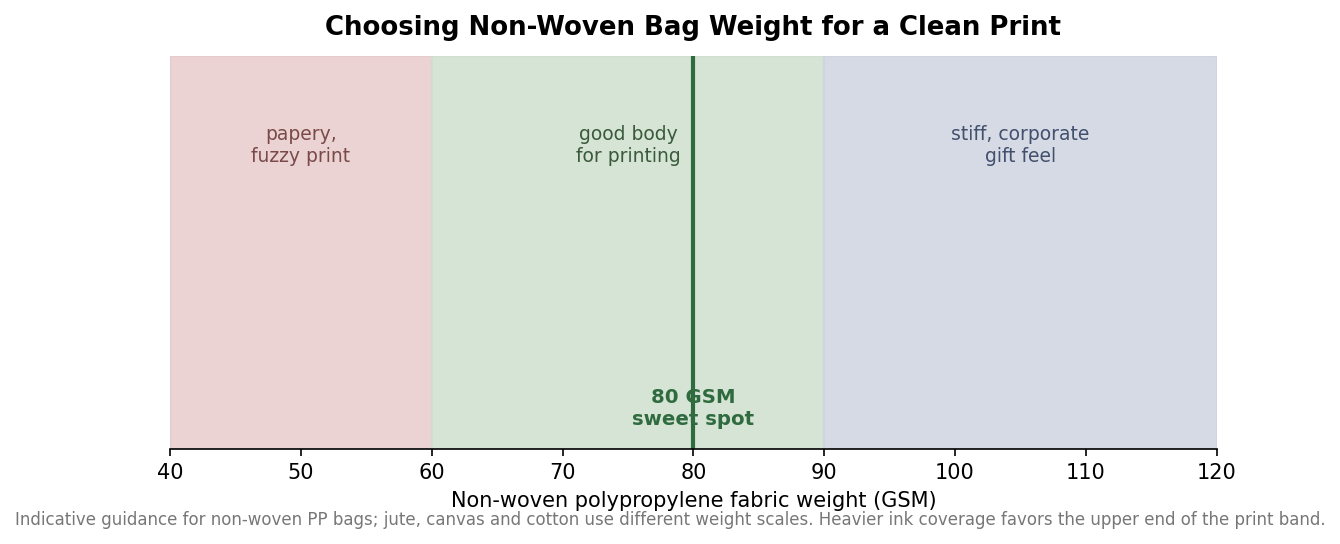
For non-woven polypropylene bags, the most common material, fabric weight is quoted in GSM, or grams per square meter, and it decides how your artwork lands. Fabric under about 60 GSM feels papery and tends to produce fuzzy print, because ink bleeds into a thin, open web and fine detail is lost. Around 80 GSM is the practical sweet spot: enough body to hold a crisp screen print and keep ink from striking through, while still folding flat for storage. Going above 90 GSM buys a stiffer, canvas-like hand that suits corporate gifting but costs more and packs bulkier. The mistake is choosing the lightest fabric to shave a few cents, then being disappointed when a detailed logo comes back soft. Match the weight to the artwork: simple one-color marks tolerate lighter stock, while detailed or multi-color designs want the middle of the range or above.
Ignoring how the handles and gusset are built
A wine bag carries real weight. A full standard bottle runs on the order of 2.7 pounds, a full Champagne bottle closer to 3.5 pounds because of the heavier glass, and a magnum well beyond that. That load hangs from the handles and rides on the bottom gusset every time the bag is lifted. The durable construction sews the handle webbing down into the body of the bag so the stress spreads across a seam, while cheap construction tacks or fuses the handles near the top edge, where they separate after a dozen uses. Overfilled bags also split at the bottom gusset. When you compare quotes, ask specifically how the handles are attached and whether the gusset is reinforced, because two bags that look identical in a photo can differ enormously in whether they survive the walk to the car. For gift and retail use where the bag is meant to be reused, this detail is the difference between a keepsake and a complaint.
Approving artwork without proofing color on the real material
Color behaves differently on fabric than on a screen or a sheet of paper, and it behaves differently again across jute, canvas, non-woven, and velvet. A deep brand red can go muddy on natural jute and crisp on white non-woven, and a screen print, a heat transfer, and embroidery each render that same red at a different saturation. The mistake is signing off on a digital mockup and assuming the physical bag will match. Insist on a Pantone reference rather than a vague color name, ask how the chosen decoration method reproduces it on your specific fabric, and where the stakes are high, get a physical pre-production proof in hand. Ten minutes spent confirming color on the actual substrate prevents a full run that is technically correct and visibly wrong.
Underestimating minimums, lead time, and the value of a sample
Custom bags are a production item, not a stock purchase, and they come with minimum order quantities and lead times that can surprise a first-time buyer. Printed custom runs commonly carry MOQs in the hundreds and lead times of several weeks from the moment artwork and color are approved, and rush production, when it is even available, costs more. The related mistake is ordering the full quantity without ever holding a single finished unit. A pre-production sample confirms the fit, the fabric hand, the handle strength, and the printed color all at once, and it is far cheaper than discovering a problem across a thousand pieces. Build the sample step and the lead time into your calendar from the start, order the custom component early, and you turn a stressful scramble into a routine reorder.
None of these mistakes require expertise to avoid; they require asking a few specific questions before you approve the order. Fit the bag to the real bottle, choose a fabric weight that flatters your artwork, confirm the handles and gusset are built to carry a full bottle, prove your color on the actual material, and never skip the sample. Do that, and a custom wine bag becomes exactly the easy, dependable product it looks like.
Leave a Reply