Custom wine bags last longest when they are spot cleaned, washed gently only when needed, air dried and stored cool and dry. Customized Wine Bags offers canvas, jute, non-woven, velvet and satin wine bags, and each material needs slightly different care. This guide covers cleaning, drying and storage for every style so your logo keeps looking sharp.
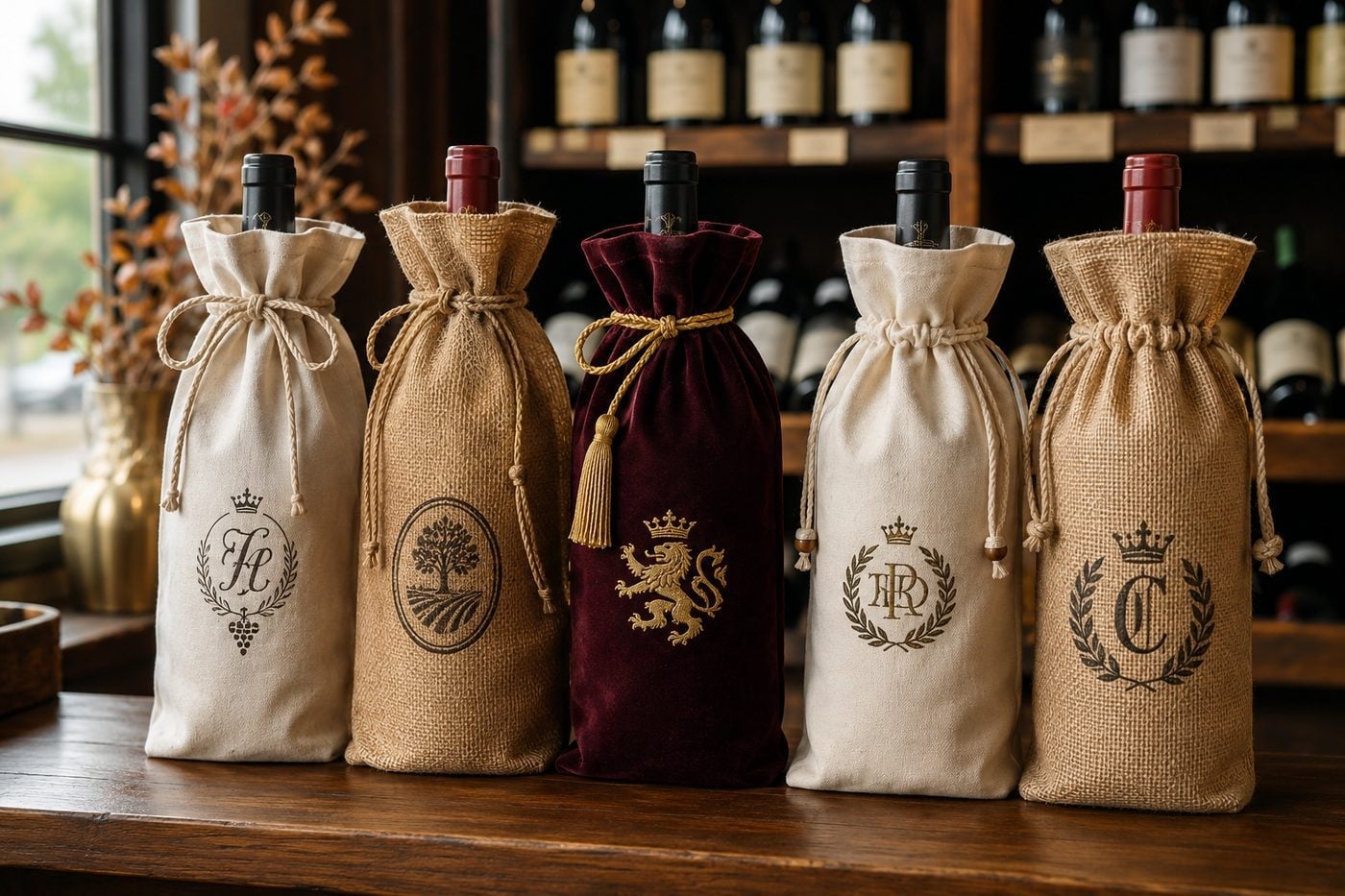
- Spot clean first; hand wash in cool water only when a whole wine bag needs it
- Air dry every material; high dryer heat shortens the life of printed logos
- Jute and burlap wine bags should be kept dry and never soaked
- Store unused wine bags in a cool, dry, dark place, sorted by material
- Free mockup within 24 hours, minimum order 12, about 2 weeks standard turnaround
How do you clean custom wine bags without damaging the logo?
Clean custom wine bags gently and as little as possible: spot clean first, wash by hand in cool water with a mild detergent only when the whole bag needs it, and always air dry. That approach protects both the fabric and the decoration, whether your logo is screen printed, heat transferred or embroidered. Most wine bags are carried for a short trip and then folded away, so a quick spot clean usually solves the problem.
The decoration is the part most likely to show wear if a bag is treated roughly. Printed ink sits on the surface of the fabric, so heavy scrubbing, hot water and high dryer heat are what dull or crack it over time. Embroidery is stitched into the fabric, so it tolerates washing well, but the thread can pull if the bag is wrung out or snagged.
- Spot clean first. Blot a spill with a damp cloth, working from the outside of the stain inward.
- Turn the bag inside out before any full wash so the logo is not rubbing against other items.
- Skip bleach and harsh stain removers on colored wine bags and on any printed area.
- Air dry flat or hanging, away from direct heat, then reshape the bag while it is still slightly damp.
When you order through Customized Wine Bags, ask which care approach suits the material and decoration on your mockup, and pass that guidance along to the people who will keep the bags.
Which wine bag materials are easiest to care for?
Cotton canvas and non-woven wine bags are the easiest to care for, jute and burlap need the most gentle handling, and velvet and satin sit in between because they clean easily but show creases and marks. The right choice depends on whether your wine bags will be used once as gift wrap or carried again and again by customers, club members or guests.
Each material on the Customized Wine Bags product pages behaves differently once it leaves the box. This comparison sums up the everyday care differences:
| Material | Everyday cleaning | Storage tip | Best long-term use |
|---|---|---|---|
| Cotton canvas | Spot clean or gentle hand wash, air dry | Fold or hang; tolerates handling | Repeat-use totes, wine club pickups |
| Non-woven | Wipe clean with a damp cloth | Store flat, away from heat | Retail checkout, events, trade shows |
| Jute and burlap | Spot clean only; avoid soaking | Keep dry and ventilated | Rustic gifts, vineyard and farm events |
| Velvet and satin | Spot clean, light hand wash for velvet | Store flat or rolled to avoid creases | Premium gifts and reserve bottles |
If you expect heavy reuse, lean toward cotton canvas wine totes. If the bags are mainly presentation pieces, velvet and satin wine bags deliver the look and only need careful storage.
How should velvet and satin wine bags be cleaned and stored?
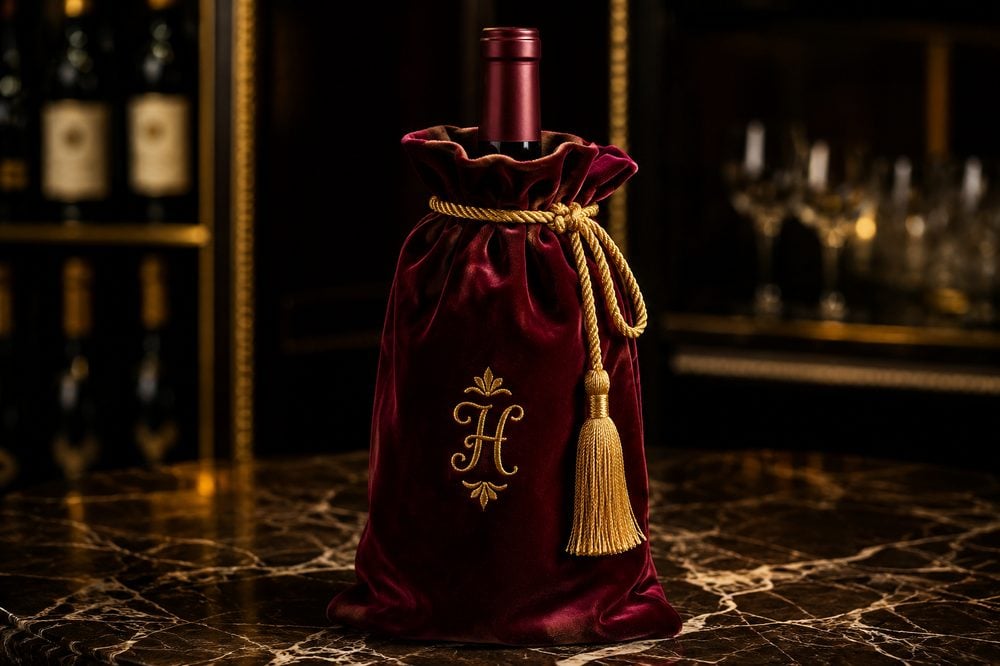
Velvet and satin wine bags should be spot cleaned with a damp cloth, stored flat or loosely rolled, and kept away from anything that presses the pile or snags the weave. These are the dressiest wine bags in the range, and their care is mostly about keeping the surface smooth rather than removing dirt, since they rarely get heavy use.
Velvet has a raised pile that shows pressure marks. If a velvet wine bag has been crushed in a box, hold it near the steam from a kettle or a garment steamer for a moment, then brush the pile gently with your hand in one direction. Never press velvet flat with a hot iron, because that can leave a permanent shine.
Satin is smooth and catches light, which also means it shows water marks and pulls. Blot spills right away rather than rubbing them, and keep satin wine bags away from rough surfaces, jewelry and the hook-and-loop fasteners on other packaging.
- Store velvet and satin wine bags in their original packaging or between sheets of tissue.
- Avoid stacking heavy cartons on top of them.
- Fill them with bottles shortly before gifting so the fabric does not hold the bottle shape for weeks.
Can jute and burlap wine bags be washed?
Jute and burlap wine bags should be spot cleaned rather than soaked or machine washed. Jute is a natural plant fiber that softens, loosens and can lose its shape when it gets saturated, so the safest care is to brush off dust, blot spills with a barely damp cloth and let the bag dry completely in open air.
The texture that makes jute and burlap wine bags look rustic also means they hold on to loose fibers and crumbs. A soft brush or a quick shake outdoors removes most of it. If a drop of red wine lands on jute, blot it immediately with cool water; rubbing pushes the stain deeper into the weave.
Moisture is the bigger long-term risk. Jute wine bags that stay damp in a closed box can develop an earthy odor or spotting. Keep them somewhere dry and ventilated, and make sure any bag that got wet at an outdoor event is fully dry before it is packed away. New jute often has a natural earthy scent that fades after a few days of airing out, which is normal for the fiber.
How do you keep canvas wine totes looking new?
Canvas wine totes stay looking new when they are spot cleaned between uses, hand washed inside out in cool water when needed, air dried and reshaped while slightly damp. Cotton canvas is the most forgiving material in the Customized Wine Bags range, which is why it suits wine clubs, tasting rooms and shops that expect customers to carry the same bag back for refills.
Canvas can shrink or wrinkle if it is washed hot or tumble dried on high heat, and a printed logo lasts longer when the tote is not dried on high. If a canvas tote wrinkles, a warm iron on the reverse side, away from the printed area, smooths it out. Keep the iron off embroidery and off the front of any print.
Handled totes take the most strain at the seams where the handles meet the body. Encourage people to carry no more bottles than the tote was designed for: single-bottle totes for one bottle, two-bottle wine bags with a divider for a pair. That simple habit does more for longevity than any cleaning routine.
How long do non-woven wine bags last?
Non-woven wine bags last for many trips when they are kept dry, wiped clean rather than washed and stored away from heat. Non-woven fabric is a pressed material rather than a woven one, so it is lightweight, holds its shape and resists spills, but it does not like soaking, wringing or high heat.
That makes non-woven wine bags a strong choice for retail counters, festivals and trade shows, where a bag needs to look sharp on the day and survive a few reuses afterward. A damp cloth handles most marks. Avoid ironing non-woven fabric directly, and keep stacks of unused bags out of hot cars, sunny windows and spaces near heaters, which can warp the material or soften the print.
If your customers will treat the bag as a long-term carrier, canvas is usually the better fit. If the bag is mainly a branded way to send a bottle home, non-woven gives you a clean logo surface with very little care required.
What is the best way to store unused custom wine bags between events?
Store unused custom wine bags in a cool, dry, dark place, in their original cartons or sealed bins, sorted by style and material. Good storage keeps colors from fading, stops natural fibers from picking up moisture and makes it easy to see how many bags you have left before the next event or holiday rush.
- Keep them dry. Basements, garages and damp cellars are risky for jute and cotton. A shelf in an office or stockroom is safer.
- Keep them out of the light. Sunlight through a window can fade dyed fabrics and printed logos over time.
- Separate materials. Rough jute can snag satin and velvet if they are packed together.
- Label the boxes. Note the style, color and event or season so the right wine bags come out first.
- Check stock early. Count what is left well before you need more, since a reorder still takes about 2 weeks after approval.
Wineries that keep wine bags at the tasting room counter should keep only a working supply out front and the rest in back stock, so the display bags stay clean and the reserve stays fresh.
How do I choose wine bags that will hold up for my use?
Choose wine bags by matching the material to how often they will be used and who will be handling them. A one-time gift needs a beautiful finish; a bag that customers carry back every month needs a sturdy fabric and a decoration that tolerates cleaning.
- Repeat-use wine club or refill programs: cotton canvas with a printed or embroidered logo.
- Premium gifts and reserve bottles: velvet or satin, stored carefully until gifting.
- Outdoor and rustic events: jute or burlap, kept dry before and after the event.
- High-volume retail and events: non-woven for a clean look with minimal care.
If longevity is your top priority, mention it when you request a quote. Customized Wine Bags returns a free mockup within 24 hours with unlimited free revisions, the minimum order is 12, and you pay nothing until you approve the design. Standard turnaround is about 2 weeks, with faster turnaround available through express shipping. You can also compare decoration options on the embroidered wine bags page or see the full process on the how it works page.
Frequently asked questions
Can custom wine bags be ironed after washing?
Custom wine bags made from cotton canvas can be ironed on the reverse side with a warm iron, keeping the iron off the printed logo and any embroidery. Velvet should never be ironed flat; use steam and a light brush instead. Non-woven and satin wine bags are best smoothed with gentle steam held at a distance, because direct heat can mark or warp those fabrics.
How do I remove a red wine spill from a canvas wine tote?
A red wine spill on a canvas wine tote comes out best when it is treated right away. Blot, do not rub, with cool water and a clean cloth, working from the edge of the stain inward, then dab with a little mild detergent and rinse. Avoid hot water and bleach, which can set the stain or fade the printed logo. Let the tote air dry fully.
Can jute wine bags get wet at an outdoor event?
Jute wine bags can handle a light splash or a brief shower, but they should not stay wet. Natural jute fiber softens and loses shape when saturated, and it can develop an earthy smell if packed away damp. After an outdoor event, open the jute wine bags up and let them dry completely in open air before storing them in a dry, ventilated spot.
Do printed logos on non-woven wine bags crack over time?
Printed logos on non-woven wine bags hold up well under normal use, and most wear comes from heat, folding along the same line again and again, or heavy scrubbing. Store non-woven wine bags flat, away from hot cars and sunny windows, and wipe them with a damp cloth instead of washing. Customized Wine Bags can suggest a decoration method suited to your expected reuse.
Why do new jute wine bags have a smell, and how do I get rid of it?
New jute wine bags often carry a natural, earthy scent from the plant fiber itself, which is normal and not a sign of a defect. Airing the jute wine bags out in a dry, ventilated room for a few days usually fades the smell. Avoid perfumes or fabric sprays, which can stain the fiber, and keep the bags dry so the scent does not return.
Can velvet wine bags be dry cleaned?
Velvet wine bags rarely need dry cleaning because they are mostly used for gifting and only pick up light marks. Spot cleaning with a damp cloth and refreshing the pile with steam handles most issues. If a velvet wine bag has a stubborn stain and you want it professionally cleaned, point out the printed or embroidered logo to the cleaner so they treat that area gently.
What is the best way to dry a cotton canvas wine tote?
A cotton canvas wine tote dries best in open air, either laid flat on a towel or hung by its handles away from direct heat. Reshape the tote while it is still slightly damp so the base and sides set square. Tumble drying on high heat can shrink canvas and wear a printed logo faster, so skip the dryer when you want the tote to last.
Is a cellar or garage a safe place to store custom wine bags?
Custom wine bags are safest in a cool, dry room, so a damp cellar or an unheated garage is a poor choice, especially for jute and cotton. Moisture can cause odor, spotting and limp fabric, while heat swings can affect non-woven bags and printed logos. Customized Wine Bags recommends an office shelf or stockroom with sealed bins for back stock between events.
What care tips should I share with customers who receive a custom wine bag?
Customers who receive a custom wine bag only need a few simple tips: spot clean spills quickly, wash gently by hand in cool water when needed, air dry, and keep the bag dry between uses. A short care line on a hang tag or a tasting room sign helps branded wine bags stay looking good, which keeps your logo in front of people longer.
How do I keep velvet wine bags from showing crease marks before gifting?
Velvet wine bags avoid crease marks when they are stored flat or loosely rolled in tissue rather than folded tightly or stacked under heavy cartons. Fill the velvet wine bags shortly before gifting so the pile does not hold a bottle impression for weeks. If a crease does appear, a few seconds of steam and a light brush with your hand usually lifts it.
Which custom wine bag material is easiest to keep clean at a busy tasting room?
Non-woven and cotton canvas are the easiest custom wine bag materials to keep clean at a busy tasting room. Non-woven wipes clean with a damp cloth, and canvas tolerates spot cleaning and gentle hand washing. Customized Wine Bags suggests keeping only a working supply at the counter and the rest boxed in back stock so display bags stay fresh.
Get a free mockup for your wine bags
Send your logo or idea and the quantity you have in mind. Customized Wine Bags returns a free mockup within 24 hours, you approve the design before anything is produced, and standard turnaround is about two weeks with faster options available. Get a custom quote.